[IPUS-RECNA 공동 세미나] Rethinking Security in Northeast Asia: Nuclear Risks, Emerging Technologies, and Economic Security through Interdisciplinary Lenses
[행사 내용]
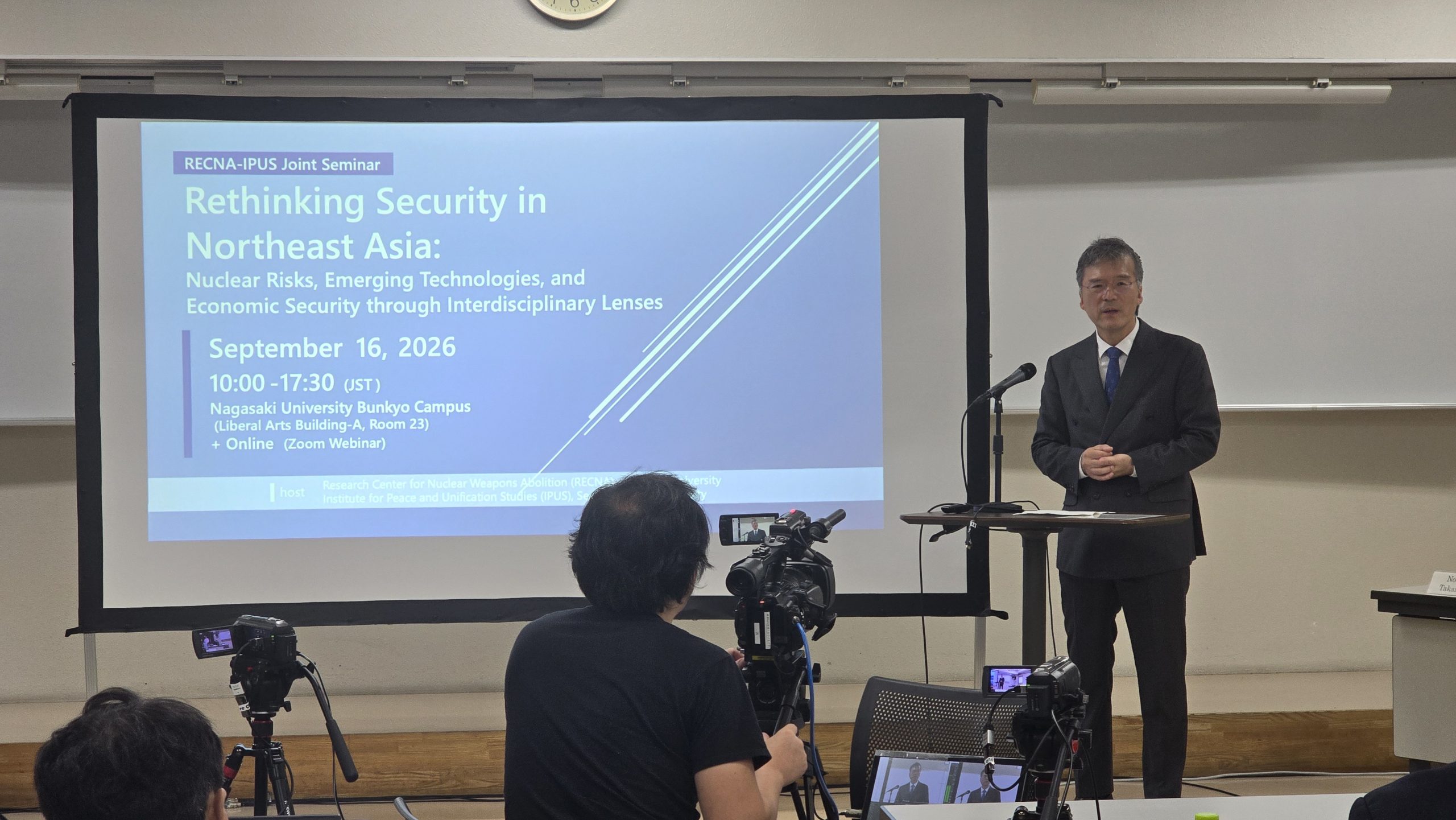
- Theme: Rethinking Security in Northeast Asia: Nuclear Risks, Emerging Technologies, and Economic Security through Interdisciplinary Lenses
- Dates: Wednesday, September 16, 2026, at 10:00-17:30 (KST)
- Venue: Room 23, Liberal Arts Building-A, Nagasaki University Bunkyo Campus
- Organized by the Institute for Peace and Unification Studies(IPUS) at Seoul National University and the Research Center for Nuclear Weapons Abolition(RECNA), Nagasaki University
- Language: English
[프로그램]
Opening 10:00–10:10
Welcome Remarks: Director Yoshida Fumihiko (RECNA) / Director Kim Bumsoo (IPUS)
Session 1 10:10–12:00
When Medicine Meets Security: Nuclear Weapons Use and the Limits of Medical Response in Northeast Asia
If nuclear weapons were actually used, to what extent could medical systems respond? This session examines the challenges of risk and crisis communication in the aftermath of a nuclear or radiological disaster, the current state and limitations of medical preparedness for nuclear contingencies, and the legal and humanitarian problems arising from armed attacks on nuclear power plants. By bridging the fields of medicine and security, the session seeks to illuminate, from multiple angles, the profound humanitarian consequences of nuclear weapons use.
Presenters: Prof. Takamura Noboru (Nagasaki University) / Prof. Jeong Joo (Seoul National University) / Ms. Smyslova Alina (RECNA)
Discussant: Prof. Sato Heigo (Takushoku University)
Moderator: Prof. Kawai Kimiaki (RECNA)
Session 2 13:30–15:20
Stability and Instability: Emerging Technologies, Economic Security, and Strategic Competition in Northeast Asia
Advances in AI and other emerging technologies are reshaping military capabilities, decision-making, deterrence, and strategic competition, with potentially profound implications for regional strategic stability. This session examines how these technological developments may contribute to both stability and instability in Northeast Asia, including through intensifying competition over critical technologies and its implications for economic security. It also explores the challenges they pose for managing strategic competition and reducing the risks of conflict and escalation.
Presenters: Prof. Lee Hyun Tai (Seoul National University) / Ms. Nishiyama Kokoro (RECNA) / Dr. Lee Jong Jin (IPUS, Seoul National University)
Discussant: Prof. Nishida Michiru (Nagasaki University)
Moderator: Prof. Hikawa Kazuko (RECNA)
Session 3 15:40–17:10
Western Nuclear Deterrence Policies from a Northeast Asian Perspective
How applicable are nuclear deterrence theories and policies, developed in a Western context during the Cold War, to the security environment of Northeast Asia? This session critically examines Western nuclear deterrence policies in light of the security realities surrounding Northeast Asia, and seeks to offer perspectives on how the role and limitations of nuclear deterrence should be assessed in the region.
Presenters: Dr. Lee Choong-Koo (Korea Institute for Defense Analyses) / Prof. Sato Heigo (Takushoku University) / Prof. Yau Hon-min (National Defense University, Taiwan)
Moderator/Discussant: Prof. Krasny Jaroslav (Nagasaki University)
Closing 17:10–17:30
Concluding Remarks: Director Yoshida Fumihiko (RECNA) / Director Kim Bumsoo (IPUS)